

Every summer, customers look for fresh, unique flavors that can transport them—even if just for a few minutes—to a tropical destination. And few ingredients evoke that feeling quite like coconut.
Its mild flavor, creamy texture, and versatility have made it a staple on summer menus at restaurants, hotels, cafes, and cocktail bars. However, incorporating it into the day-to-day operations of a hospitality business isn’t always as easy as it seems.
The key is to find a way to harness its full culinary potential without complicating kitchen operations or increasing food waste.
So much more than the classic piña colada
When we think of coconut, the first image that usually comes to mind is a piña colada by the sea. But the possibilities of this ingredient go far beyond that.
More and more restaurants are adding coconut to their summer menus to give their dishes—both sweet and savory—a unique and exotic touch.
From desserts and cocktails to brunch, smoothies, and international cuisine, coconut adds tropical flavors that customers immediately associate with summer, vacations, and leisure.
A tropical cocktail bar that’s open every summer
Cocktail bars are probably one of the places where coconut works best within the Horeca sector.
Piña coladas, daiquiris, smoothies, frappés, and signature cocktails all find the perfect balance of creaminess, freshness, and tropical flavor in this ingredient.
Furthermore, during the busiest months, speed and consistency in each preparation become key factors for any establishment.
Desserts That Set the Menu Apart
Coconut pairs especially well with fruits such as mango, pineapple, passion fruit or berries, making it the perfect choice for creating fresh and appealing dishes during the hot summer months.
Mousses, cheesecakes, ice cream, cold cakes, semifreddos, and tropical verrines are just a few of the options that allow you to refresh your dessert menu without having to make major changes in the kitchen.
In addition, customers tend to perceive these types of dishes as lighter and more refreshing options, something that is especially appreciated in the summer.
Brunch and breakfast with a tropical twist
The rise of brunch and healthy food options has also opened up new opportunities for coconut in the hospitality industry.
Smoothie bowls, yogurt, pancakes, and fruit bowls all benefit from this ingredient, which offers a simple way to add creaminess and character to the establishment’s menu.
They are also very visually appealing and have great potential for generating engaging content on social media, which is becoming increasingly important for restaurants and cafes.
International cuisine and savory dishes
Although it is usually associated with sweet dishes, coconut also has enormous potential in savory cooking.
Curry dishes, sauces, cold soups, and dishes inspired by Asian and Caribbean cuisine regularly incorporate this ingredient, enriching the menu with original offerings that customers perceive as having high value.
A simple way to go on a culinary journey without leaving the restaurant.
The challenge: incorporating coconut without complicating operations
The main challenge for many businesses is not so much coming up with ideas for using coconuts, but rather doing so in a profitable and efficient way.
Working with fresh produce can lead to waste, variations in flavor, or difficulties in maintaining consistent quality throughout the season.
That is why more and more professionals in the industry are opting for solutions specifically designed for the hospitality industry, which allow them to maintain the same quality and streamline food preparation even during peak periods.
Coconut Puree: A Professional Solution for the Horeca Sector
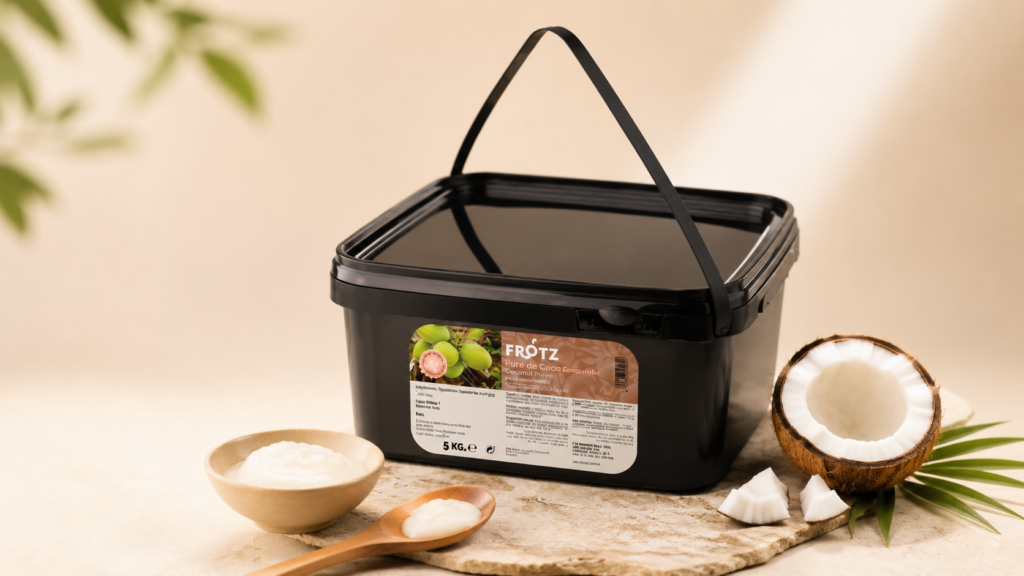
Coconut puree has become one of the most practical options for incorporating this tropical flavor into any restaurant’s summer menu.
It allows you to work with a smooth, creamy texture, maintain a consistent flavor, and significantly reduce preparation time and food waste in the kitchen.
Frotz coconut puree is made from select coconut creams sourced from Indonesia and has a fat content of 24–28%, which provides exceptional creaminess and stability in recipes. Furthermore, since it contains no grated coconut, it is particularly well-suited for applications such as ice cream, siphons, or recipes where a completely smooth and uniform texture is desired.
All of this is done without added flavors, preserving the authentic taste of coconut.
This summer, add a tropical touch to your menu
Coconut has established itself as one of the flavors most closely associated with summer and offers countless possibilities for restaurants, hotels, cafes, and cocktail bars looking to set their seasonal offerings apart.
From cocktails and desserts to brunch and international cuisine, adding it to the menu can be an excellent opportunity to surprise customers and add value to the dining experience.
And when this is done using solutions designed specifically for the Horeca channel, innovation becomes much easier.
Because sometimes, just a little tropical touch is enough to turn a dish into a memory that the customer will want to relive.